Ingredients
Method
- Prepare the oven and salmon.
- Preheat oven to 200°C (400°F). Pat salmon fillets dry with paper towels. Rub each piece with olive oil, then season with salt, pepper, and lemon zest. Arrange in a lightly greased baking dish.
- Pro Tip: Drying the salmon helps achieve a better sear and prevents steaming.
- Bake the salmon.
- Bake for 12–15 minutes, depending on thickness, until salmon flakes easily with a fork. Internal temperature should read 52–55°C (125–130°F) for medium doneness.
- Visual Cue: Flesh should be opaque on top but slightly translucent in the center.
- Start the sauce.
- While salmon bakes, melt butter in a 12-inch skillet over medium heat. Add garlic and sauté for 1–2 minutes until fragrant (avoid browning).
- Build the cream base.
- Pour in heavy cream, stirring continuously. Reduce heat to low and let simmer for 3–4 minutes until slightly thickened. Add Parmesan, Dijon mustard, and dried Italian herbs. Whisk until smooth and creamy.
- Add freshness.
- Stir in chopped parsley and a squeeze of fresh lemon juice. Adjust seasoning with salt and pepper. For add-ins, stir in spinach until just wilted, or fold in cherry tomatoes for color and sweetness.
- Combine and finish.
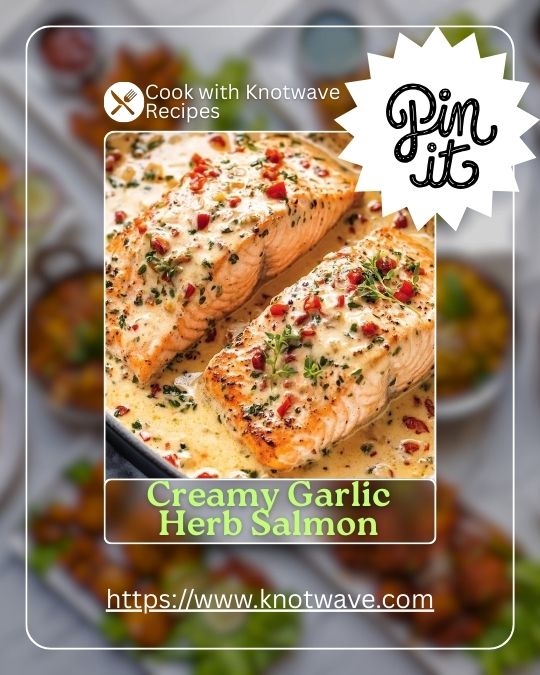
- Transfer baked salmon fillets into the skillet with the sauce, spooning the creamy garlic herb mixture over the top. Let everything rest for 2–3 minutes to absorb flavor.
- Serve and enjoy.
- Plate salmon fillets generously drizzled with sauce. Garnish with extra herbs or lemon wedges. Serve immediately with your choice of sides.
- Serving Idea: Pair with roasted asparagus, mashed potatoes, or buttered rice.
- Make-Ahead Option: Store sauce separately; reheat gently and combine with reheated salmon just before serving.
Notes
Variations
- Spicy kick: Add red chili flakes or cayenne pepper to the sauce.
- Protein swap: Use chicken breasts or shrimp instead of salmon.
- Low-carb: Serve with zucchini noodles or cauliflower rice.
Substitutions
- Oil: Replace olive oil with ghee or avocado oil.
- Dairy-free: Use coconut cream and a dairy-free cheese alternative.
- Herbs: Try dill, basil, or tarragon instead of parsley.
Make-Ahead & Storage
- Fridge: Store salmon and sauce separately in airtight containers for up to 3 days.
- Freezer: Freeze salmon (without sauce) for up to 2 months. Thaw overnight in fridge.
- Reheat: Warm salmon gently at 160°C (325°F) covered with foil; reheat sauce on low, adding a splash of milk if needed.
Troubleshooting & Common Mistakes
- Dry salmon: Always check internal temperature; pull at 52–55°C (125–130°F).
- Sauce too runny: Simmer longer to reduce or whisk in extra Parmesan.
- Sauce too thick: Add splash of milk or broth.
- Garlic bitter? Cook garlic only until fragrant, not browned.
Tools & Equipment
- 9x13-inch baking dish
- 12-inch skillet or sauté pan
- Instant-read thermometer (for perfect doneness)
- Whisk and spatula
Serving Ideas
- With roasted veggies like broccoli or asparagus.
- Over pasta or rice for a comforting meal.
- With a fresh garden salad for a lighter option.
- Paired with crisp white wine such as Sauvignon Blanc or Chardonnay.
Nutritional Information (per serving, approx.)
- Calories: 450
- Protein: 36 g
- Carbohydrates: 5 g
- Fat: 32 g
- Fiber: 1 g
- Sodium: 540 mg